Programme
- 09:30 - 10:00 Opening & Welcome
-
10:00 - 11:00 Session 1
-
Deception By Design: Anti-Piracy Deception In Video GamesIn Person
-
Cozy Cracks: Involuntary Diegetic Friction and Reflective Play in Domestic Game SpacesRemote
-
The Subversion of User-Friendly Design: Engagement Algorithms and the Erosion of Agency in the Attention EconomyIn Person
-
Narrative Wandering: Infinite Hallways in Video Games as a Storytelling TropeRemote
-
-
11:30 - 12:30 Session 2
-
Otherworldly Encounters: Wild Anecdotes on Interspecies CareIn Person
-
Oracular interfaces: Epistemic Mischief as a Method for Playful Friction to Subvert AI Systems through Divination and Magic metaphorsRemote
-
Inside the Black Box: Situated Decision-Making and Automation in the Art Installation “EZ Quality Sorter”In Person
-
From Flow to Friction: Thinking Spaces in VR and AIRemote
-
Companionship Mechanics in AI-Driven Character Platforms: Deceptive and Friction Design in Character.aiIn Person
-
- 13:00 - 14:30 Lunch Break
-
14:30 - 15:30 Session 3
-
Productive Friction for Explainable AI Visualisation: Facilitating Genuine Understanding for Non-ExpertsIn Person
-
Using Narrative to Identify Frictions: A process for Requirements Definition in Software ProjectsRemote
-
FLOP: Failures Lead to Original PerspectivesIn Person
-
Not Everything Resolves: Rethinking Menopause Beyond User-Centred DesignRemote
-
Enraging the Loop: Rage as Aesthetic Friction in PlayIn Person
-
-
15:45 - 16:45 Session 4
-
Paradoxical Temporalities of Computation: Critical and Speculative PracticesIn Person
-
Underdetermined Fingerpainting as Playful FrictionRemote
-
Designing Ecocentric AI: Rethinking Ecosystem Representation in Large Language ModelsIn Person
-
The Poetic Image of the Machine: Dark Cartographies, Machinic Desire, and the Disruption of FlowRemote
-
Ontology Design in the Age of Climate CollapseIn Person
-
-
17:00 - 18:00 Keynote AddressChickens and Bones: from Fossils to AlgorithmsIn Person
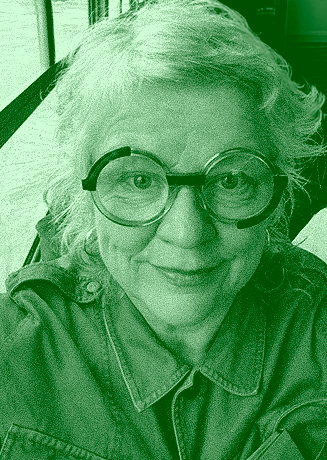
Laura Beloff (Ph.D.) is an internationally acclaimed artist and researcher, who functions in-between artistic production and academic research with a core in artistic methods. Beloff’s concept- and practice-driven research is located in the cross-section of art, science and technology. The research engages with art, humans, environment in affiliation with science and technology, biology, artificial intelligence, robotics, human enhancement and their theories. Beloff’s interest in recent years has focused on investigating the diminishing gap between concepts and disciplines of biology and technology. Currently, she is Associate Professor and Vice-Dean for Artistic and Creative Practices at Aalto University – School of Art, Design and Architecture.
Digital technology and data science are largely built on the premise that data is what matters. In this worldview, unpredictability, disagreement, and the messiness of life appear as errors to be engineered away. This talk explores moments, both in everyday life and in art, where friction emerges and, in doing so, opens up alternative ways of seeing and knowing.
Traditional museum collections can be understood as constructed systems for ordering time, knowledge, and matter. A cabinet of rocks and fossilized bones is often treated as a repository of specimen, data, and scientific heritage. But these collections also preserve and project a worldview - with labels, drawers, catalogues, storage structures, classification systems and institutional traditions. A collection can be seen as a technology for world-making - also when it carries the embedded legacies of colonialism. Consider a bone that spends millennia in soil, decades in a museum as a fossil, and then, today, it is packed away because space is costly and gained profit is unlikely. In such moments, friction surfaces among values, economies, and especially in shifting worldviews. One should also ask what remains out of sight, hidden or lost, when we choose what to keep or what to discard.
Today, technology cannot be disentangled from the material, physical world – everything terrestrial is entangled together. Our contemporary lives unfold between algorithms, data-bases, AI-driven forms of governance, strata, fossils and biological life. Artists respond to this situation by developing strange and speculative tools as artworks hat do not simply represent the world but intervene critically in how it is organized, perceived, and valued. Occasionally these works also explore plausible futures with alternative trajectories.